
However, modern fulfillment operations demand more than a traditional standalone inventory management program. As 3PL networks become more distributed, automated, and client-specific, inventory data must be updated in real time and integrated directly with warehouse execution and order orchestration. This shift has blurred the lines between inventory management programs, warehouse management systems (WMS), and fulfillment management systems (FMS).
This guide to inventory management explains IMS, why its role has evolved in today’s fulfillment environments, and what 3PLs should look for in an inventory management program.
Contents
- What an inventory management program is
- Why modern fulfillment requires more than a traditional IMS
- Essential capabilities of an inventory management program for 3PLs
- Checklist: How to evaluate scalability, integrations, and future fit
- Comparing IMS, WMS, and FMS
- FAQs about inventory management programs
What an inventory management program is
An inventory management program, often referred to as an inventory management system (IMS), is software that helps 3PLs track stock levels, costs, orders, and demand signals across locations. Teams often utilize IMS to enhance inventory visibility and facilitate replenishment planning, thereby reducing stock discrepancies across multiple clients and facilities.
Alongside WMS and FMS, the inventory management process has long been a key part of 3PLs’ tech stack. While these systems all manage warehouse-related data, they historically served different roles:
- IMS focused on inventory tracking, availability, valuation, and forecasting. It answered the question, “What inventory exists and where?” but typically didn’t manage how orders are fulfilled.
- WMS focused on warehouse execution, such as receiving, putaway, and picking.
- FMS goes beyond the traditional WMS to include packing, labor management, and automation workflows, as well as fulfillment orchestration across channels and locations.
In recent years, these boundaries have blurred as 3PLs need real-time accuracy across distributed networks. As a result, leading fulfillment platforms increasingly embed IMS functionality directly into WMS and FMS workflows instead of deploying a standalone IMS.
Why modern fulfillment requires more than a traditional IMS
Traditional programs for inventory management were designed primarily for static stock control, often using batch updates rather than continuous, real-time data. This approach worked for single-site warehouses with predictable purchase order volumes, but it’s not sufficient for modern, multi-node, high-volume ecommerce fulfillment.
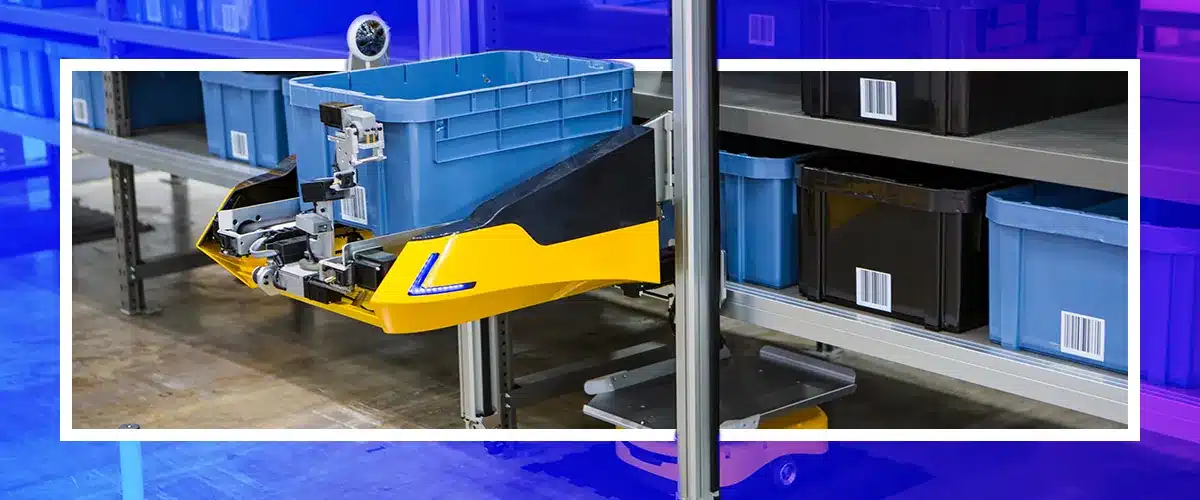
As autonomous mobile robots (AMRs), automated storage and retrieval systems (AS/RS), and goods-to-person systems become more common in warehouses, fulfillment systems must be able to work seamlessly with automated equipment. Inventory data also needs to update in real time as automated systems pick, move, and route inventory, so teams can maintain accurate stock levels and make timely fulfillment decisions without manual intervention.
Finally, modern 3PL fulfillment needs multi-client workflows within the same network. That’s because 3PLs simultaneously serve multiple customers with different inventory priorities, service-level agreements (SLAs), and routing rules. Managing this level of complexity requires more than a traditional inventory management program, which is why inventory data must be tightly integrated with fulfillment execution.
Unlock a personalized tour of Logiwa IO
Essential capabilities of an inventory management program for 3PLs
For 3PLs running complex fulfillment networks, inventory management software needs to do more than track stock. Here’s what the ideal IMS should provide:
- Centralized, network-wide visibility is the backbone of a strong warehouse inventory management program. To operate and scale efficiently, 3PLs need a single source of truth for inventory across all facilities, clients, and sales channels. That way, teams get accurate availability reporting and consistent fulfillment decisions at all times.
- Real-time synchronization between inventory, orders, and automation equipment is equally vital. Inventory data must update continuously as the system allocates, picks, packs, and routes orders through automated equipment. This ensures accuracy throughout execution workflows.
- Configurable rules are another factor to consider. This includes flexible logic for SLAs, order routing, replenishment thresholds, and client-specific billing requirements. This allows 3PLs to tailor operations without costly custom development.
Tight integration between inventory management and warehouse execution plays a major role in reducing labor, improving accuracy, and supporting automation return on investment (ROI). When inventory intelligence is directly connected to WMS workflows, 3PLs can more easily eliminate manual reconciliation, reduce errors, and fully leverage automated fulfillment systems.
Checklist: How to evaluate scalability, integrations, and future fit
Use this checklist to assess long-term fit when building your tech stack:
- Integration essentials: Confirm smooth integration with enterprise resource planning (ERP), transportation management system (TMS), ecommerce platforms, and major marketplaces, enabling data to flow seamlessly across the entire fulfillment ecosystem.
- Data architecture and extensibility: Evaluate whether platforms are cloud-native, headless, and versionless. These features enable frequent updates, faster innovation, and easier customization without disrupting operations.
- Automation readiness: Make sure the system can orchestrate AMRs, AS/RS, conveyor systems, and future tools.
- Multi-client capabilities: Assess how quickly the system enables you to onboard new clients and whether it supports configurable workflows, client-specific rules, and automated billing within a shared environment.
- Scalability indicators: Look for proven support for increasing order volumes, higher throughput requirements, and fluctuating labor conditions without sacrificing performance or accuracy.
Comparing IMS, WMS, and FMS
To help 3PLs evaluate inventory management software to prevent stockouts, the table below outlines how IMS, WMS, and FMS differ:
| System | Main role | Strengths | Weaknesses |
|---|---|---|---|
| Inventory Management System (IMS) | Inventory visibility and control | Tracks stock levels, availability, and inventory value across locations; best for basic replenishment planning | Lacks real-time execution control, automation orchestration, and advanced fulfillment logic |
| Warehouse Management System (WMS) | Warehouse execution | Manages receiving, putaway, picking, packing, shipping, labor workflows, and on-floor automation | Limited in cross-node order orchestration and network-level fulfillment decisions |
| Fulfillment Management System (FMS) | Order orchestration across the network | Routes orders across locations and channels; balances demand, capacity, and service-level requirements | Depends on tight integration with WMS for accurate execution and inventory updates |
The best choice depends on your goals. A standalone IMS may be sufficient for simple, low-volume operations, such as single-location warehouses or environments without client-specific workflows or automation. However, as order volumes grow and fulfillment networks become more complex, you will typically need WMS and FMS capabilities to gain execution-level control over how AI and teams pick, pack, route, and ship inventory.
Many 3PLs attempt to bridge the gap between a standalone IMS and full execution control by layering an IMS on top of separate warehouse or fulfillment tools. While this approach is effective in the short term, it often introduces data latency, manual fixes, and fragmented workflows that limit automation ROI as operations scale.
Unified, cloud-native ecommerce fulfillment platforms like Logiwa IO address these challenges by combining inventory intelligence, warehouse execution, and fulfillment orchestration. This unified approach enables real-time accuracy, scalability, and operational resilience.
Curious to see how Logiwa IO works? Request a demo today.
FAQs about inventory management programs
What is the difference between an inventory management program (IMS) and a warehouse management system (WMS)?
While both systems track stock, an inventory management program (IMS) primarily focuses on stock levels, valuation, and procurement—answering the question, “What do we have and when should we reorder?”. A warehouse management system (WMS) focuses on the physical movement of goods, directing warehouse execution tasks like receiving, putaway, and picking. In 2026, many 3PLs are moving toward unified fulfillment management systems (FMS) that combine both for real-time orchestration.
Why should multi-warehouse 3PLs move away from standalone inventory management systems?
How does AI-driven forecasting improve inventory management programs in 2026?
Modern inventory management programs now leverage AI-powered predictive analytics to analyze historical order data and current market trends. This allows 3PLs to offer “intelligent slotting” and automated replenishment, ensuring that high-velocity SKUs are stored in the most efficient locations and reordered before a stockout occurs.
What features are essential for a 3PL inventory management program to be "automation-ready"?
How do multi-client workflows function within a shared 3PL environment?
Systems like Logiwa IO allow 3PLs to manage multiple customers within a single system by using configurable, client-specific rules. This includes unique service-level agreements (SLAs), tailored billing logic, and specialized packing requirements for each brand, all while maintaining a “single source of truth” for the 3PL operator.
Can a cloud-native fulfillment platform reduce 3PL labor costs?
Yes. By automating manual reconciliation and providing system-guided workflows, cloud-native platforms like Logiwa IO reduce the need for manual data entry and administrative oversight. Real-time visibility also improves picking accuracy and reduces the labor hours spent on cycle counts and troubleshooting discrepancies.