Given that giants like Amazon have made returns and refunds ubiquitous, clients now often take them for granted. But for third-party logistics (3PL) providers managing multiple clients simultaneously, returns remain one of the most operationally complex functions in the warehouse and among the most consequential for client retention.
We’ll look at how reverse logistics work, how 3PL warehouses handle returns, and the operational challenges of managing 3PL returns at scale. You’ll also learn best practices for scalable 3PL returns management and how modern warehouse management software (WMS) like Logiwa can help 3PLs address gaps in the returns process.
Understanding 3PL reverse logistics
3PL reverse logistics is the outsourcing of post-sale operations such as product returns management, repairs, and recycling, to an external or third-party provider. The purpose of outsourcing to a 3PL is to streamline the return of goods and increase customer satisfaction.
Unlike in-house reverse logistics, which manages returns for a single brand with a single set of policies, a 3PL handles returns across multiple clients simultaneously. Each client has different SKU profiles, return policies, and disposition rules.
The scope of 3PL reverse logistics includes:
- Customer returns: 3PLs manage returns by handling tasks like generating return labels, inspecting items, and tracking shipments.
- Product recalls: When customers report issues with a product, the product may be recalled depending on the severity of the risk and compliance requirements. 3PL teams coordinate the retrieval, segregation, and disposal or return of recalled inventory.
- Refurbishment: Returned items can often be resold. 3PL reverse logistics providers prepare items for refurbishment by inspecting, repairing, and repackaging them so they can re-enter the sales channel without compromising quality.
- Recycling: Some goods may not be able to be resold due to hygiene or quality issues. To prevent waste, 3PLs can recycle them by routing them through compliant recycling streams or eco-friendly disposal channels.
How 3PL warehouses handle returns
3PL warehouses follow a structured workflow for their clients’ returns:
- Return authorization: Before the item reaches the warehouse, the 3PL generates return shipping labels and tracking numbers and logs the incoming parcel in the WMS.
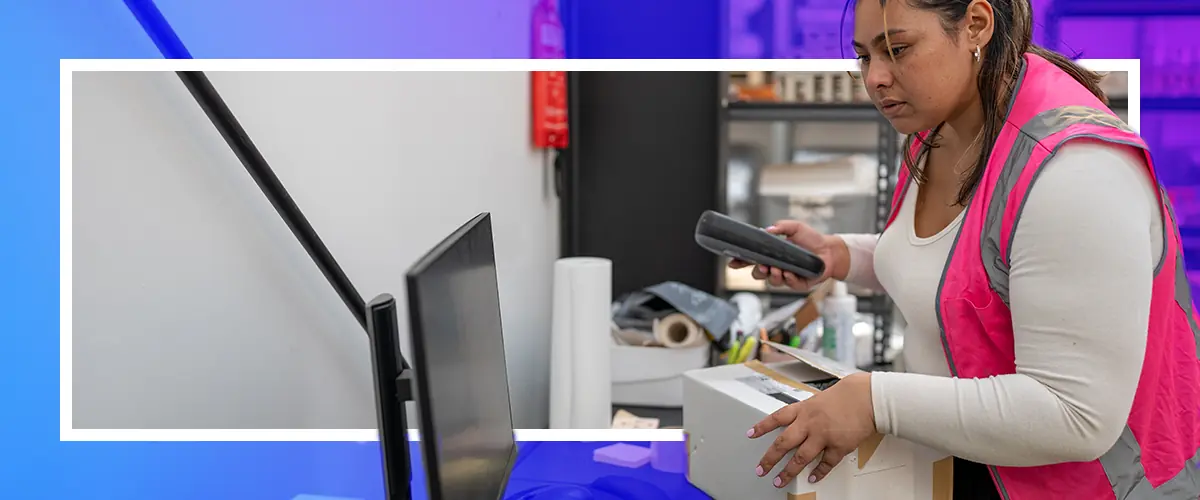
- Receiving and inspection: Once the item arrives, warehouse staff physically check it in, verify it against the return authorization, and grade its condition according to the client’s pre-defined criteria.
- Disposition decisions: Based on the condition grading and the client’s configured disposition rules, the 3PL determines the next step, whether that’s restocking for future orders, refurbishment, liquidation through secondary channels, recycling, or disposal.
- Inventory updates: The WMS updates the client’s inventory in real time. Items that meet the criteria for restocking and resale re-enter available inventory, while defective or disposed items are removed from the count.
- Client notification for refund or store credit processing: Finally, the 3PL notifies the client about the completed return and its outcome. This triggers their refund or store credit workflow on their end.
Handle returns at scale with Logiwa IO
Operational challenges of managing 3PL returns at scale
Reverse logistics is structurally harder for 3PLs than for single-brand operators. That’s partially because they have multiple clients who introduce complexity at every stage of the process:
- Visibility in returns inventory: Without real-time tracking, returned items can sit in limbo between receipt and disposition. This can create inventory blind spots that affect the 3PL’s operational planning and the client’s ability to report on stock.
- Managing different return policies and disposition rules per client: Each client may have different return windows, acceptable condition thresholds, and disposition preferences. Without a system that automatically enforces per-client rules, 3PLs are at high risk of errors and slower work.
- Maintaining SKU-level accuracy across high-volume ecommerce returns: Returns arrive in different conditions, sometimes without barcodes or original packaging.
- Meeting service-level agreement (SLA) commitments for return-to-shelf time: Clients contract with 3PLs due to favorable and predictable SLAs for return-to-shelf time. 3PLs that miss SLAs erode client trust.
- Handling seasonal spikes in return volume: Post-holiday and post-promotional periods often lead to spikes in returns that can overwhelm warehouse capacity if not planned for.
- Providing timely, accurate reporting to clients: Clients need visibility into their returned inventory, specifically volumes, condition grades, disposition outcomes, and processing times. 3PLs without the right technology to do this often handle it manually, which is time-intensive and error-prone at scale and can inflate the cost of reverse logistics.
Fortunately, all of these challenges are solvable with the right processes and technologies, such as 3PL warehouse automation systems and AI in returns management.
Best practices for scalable 3PL returns management
The 3PLs that manage returns most effectively at scale run on a consistent operational infrastructure built around the following practices:
- Dedicated returns processing areas: Creating physically separated areas for returns functions prevents items from outbound workflows from mixing in and creating chaos. It also reduces processing delays and allows returns staff to focus on their specific tasks.
- Standardized disposition rules configured per client: Before onboarding, 3PLs should configure each client’s disposition logic into the WMS. Instead of making manual decisions on the floor, staff follow system-guided rules automatically and consistently. This helps reduce errors and increase processing speed.
- Clear SLA definitions agreed with each client: Before processing any returns, 3PLs should obtain the client’s agreement to clear SLA definitions, including return-to-shelf timelines, condition-grading standards, and reporting frequencies.
- Staff training on grading consistency: 3PLs should host regular calibration sessions where staff independently grade the same items and compare results. These sessions can help identify drift in condition assessment before it affects disposition accuracy.
- Regular audits of return accuracy and processing speed: 3PLs should also conduct periodic internal audits to find and fix gaps before they escalate into client complaints or financial losses. Examples of such audits include comparing WMS records against physical inventory to assess accuracy and reviewing disposition outcomes against client rules.
Using WMS to solve gaps in managing returns for 3PLs
Managing returns can be challenging, especially for 3PLs handling multiple clients with large inventories. That’s why modern cloud WMS software programs like Logiwa IO, built for multi-client 3PL operations, are vital for staying on top of your return game. They address the operational challenges associated with returns by providing automated return authorization workflows, real-time visibility into return status across all clients, configurable disposition rules by client and SKU, accurate inventory updates as returns are processed, and client-facing reporting dashboards.
Curious to see how Logiwa IO can make returns easier for you? Request a demo today.
FAQs on 3PL reverse logistics
What is the difference between forward and reverse logistics?
While forward and reverse logistics are deeply interconnected, their operational realities differ significantly.
- Forward logistics is planned and demand-driven, covering the structured movement of goods from the warehouse to the end customer.
- Reverse logistics is reactive and supply-driven, managing the unpredictable flow of goods back to the 3PL due to customer returns, failed deliveries, or product recalls.
Because returns arrive off-schedule and require complex, item-by-item inspection and grading, reverse logistics typically costs two to three times more than forward operations.
How much does 3PL reverse logistics cost?
Returns are highly labor-intensive, so pricing relies heavily on the depth of inspection required. Based on 2026 industry averages, businesses can expect the following baseline costs:
- Standard Processing: Basic receiving, visual inspection, and restocking usually costs between $3.00 and $5.00 per return.
- Advanced QA: For complex categories like apparel or electronics that require detailed condition grading, testing, or photography, fees range from $5.00 to $8.00 per item.
- Disposal: Unsellable items that require secure destruction, recycling, or disposal incur additional fees, averaging $1.25 per unit.
How long does the 3PL returns management process take?
While brands aim for lightning-fast return-to-shelf timelines, thorough reverse logistics takes time. Current industry data reveals that the average returned package takes 10 to 14 days to process through a 3PL facility. During peak ecommerce seasons, such as the post-holiday rush, processing can stretch to 20 or more days. Utilizing a multi-client WMS helps compress these timelines by automating disposition rules and eliminating the lag between physical inspection and system inventory updates.
What are the emerging best practices for 3PL returns management in 2026?
To keep reverse logistics scalable and profitable, top-performing 3PLs are adopting several new operational standards:
- Flexible Capacity Planning: Instead of paying for empty space year-round, 3PLs are increasingly leveraging month-to-month warehouse leases to expand floor space specifically for seasonal return spikes.
- AI-Assisted Inspections: Facilities are utilizing automated checklists and AI-assisted imaging to standardize condition grading and remove human guesswork.
- Strict Intake Separation: Operators are creating dedicated staging zones for specific disposition paths to prevent cross-contamination, ensuring that a liquidation pallet never accidentally blocks a repair bench or mixes with outbound shipments.